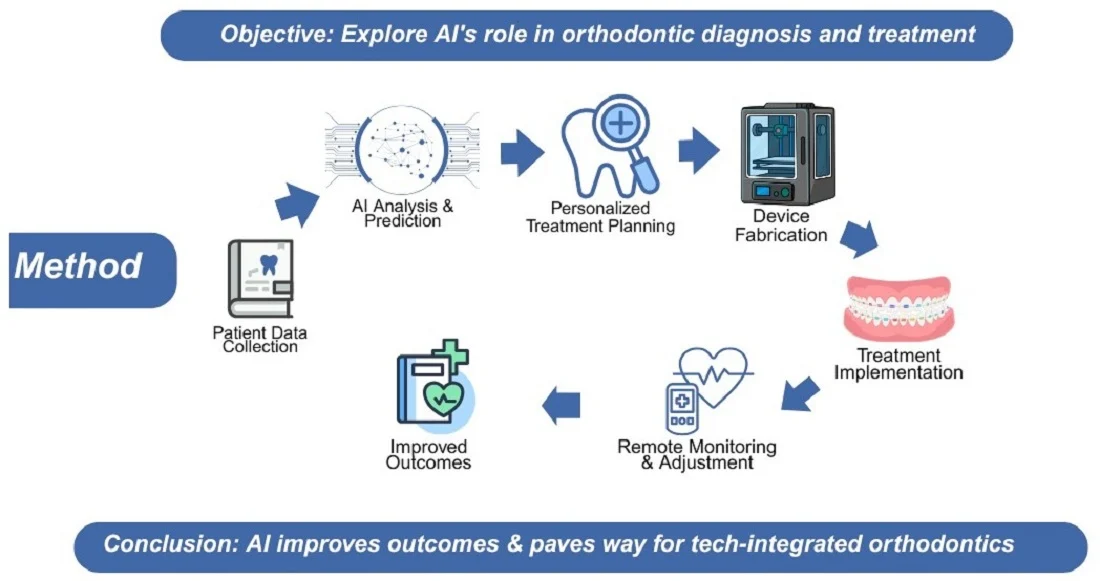
Advances in dental technology are reshaping the field of orthodontics faster than ever before. Digital tools, AI-enhanced planning systems, and precision-engineered appliances now allow orthodontists to create treatment plans that are more accurate, more efficient, and far more comfortable for patients. These innovations remove much of the guesswork that once defined traditional methods, making it possible to predict tooth movement with remarkable precision and reduce both treatment time and complications.

As a result, modern orthodontics is shifting toward a fully integrated digital model that prioritises patient experience and long-term oral health. Looking ahead, the future of AI-driven treatments in orthodontics is poised to elevate outcomes even further, enabling orthodontists to provide care that is more adaptive, more predictive, and more deeply personalised than ever before. One of the most transformative developments has been the rise of intraoral scanning. Instead of relying on messy physical impressions, orthodontists can now capture ultra-detailed 3D images of a patient’s teeth and bite within minutes.
These digital scans are not only more accurate but can be instantly shared with labs, software platforms, and treatment-planning systems. This seamless workflow leads to appliances that fit better and exert more controlled forces, ultimately improving treatment predictability. Intraoral scanning also enhances comfort by eliminating the discomfort of traditional moulds and giving patients the ability to visualise their treatment progress through clear and interactive digital models. A second major breakthrough is the rise of AI-powered orthodontic software, which enhances diagnostic precision and allows orthodontists to design highly personalised plans. These systems analyse thousands of data points from digital scans, facial structure, bite alignment, and dental history to map out the most efficient path to ideal results.
This technology is especially valuable for complex cases that previously required lengthy treatment or surgical intervention. By simulating tooth movement in real time, AI-driven tools allow orthodontists to identify potential challenges before treatment begins, make adjustments scientifically rather than manually, and significantly reduce the number of revisions and in-person visits needed throughout the process.
Clear aligner therapy also owes much of its success to digital innovation. Modern aligners are created with advanced 3D printing and modelling technologies, ensuring that every tray applies precise pressure to achieve targeted movement. Because of this accuracy, many patients enjoy faster results compared to conventional braces, along with enhanced comfort and the convenience of a removable, nearly invisible device. Digital monitoring systems further support aligner therapy by allowing orthodontists to track progress remotely, reducing the need for frequent appointments without compromising treatment quality.
Even traditional braces have undergone a digital transformation. Today’s fixed appliances use robotic wire-bending technologies and custom-designed bracket systems tailored to each patient’s anatomy. This level of personalisation results in smoother, more predictable tooth movement, fewer emergency visits, and a lower risk of complications such as root resorption. Innovations in materials—such as heat-activated wires and smaller, sleeker brackets—have also made braces lighter, more effective, and far more aesthetically appealing than earlier versions.
Another essential advantage of technology-driven orthodontics is the improvement in diagnostics and monitoring. Advanced imaging tools like cone-beam computed tomography (CBCT) provide a comprehensive 3D understanding of a patient’s teeth, jaw structure, airway, soft tissue, and underlying bone morphology. This level of detail is invaluable in diagnosing impacted teeth, growth-related discrepancies, and airway concerns, helping orthodontists plan treatments that not only straighten teeth but also improve function and facial harmony. Digital monitoring tools add another layer of control by measuring tooth movement with exceptional accuracy, ensuring that even the smallest deviations are corrected early.
For orthodontic practices integrating these technologies, the ability to deliver predictable, aesthetically superior, and highly efficient outcomes is transforming patient expectations. More patients now seek orthodontic care not only for cosmetic improvements but also for enhanced bite function, long-term oral health stability, and improved facial balance. Technology makes this possible by offering a level of precision, transparency, and customisation that traditional methods simply could not match. This evolution underscores why technology-driven orthodontics is not just a trend but the new gold standard for achieving exceptional, enduring results.
As digital integration continues to evolve, patients will benefit from orthodontic solutions that are not only more effective but also less invasive, more comfortable, and tailored to their unique needs. These innovations highlight how modern treatments significantly improve oral health, creating lifelong advantages that extend well beyond the cosmetic benefits of a straighter smile.